Virtual Try-On AI: How to Showcase Fashion Products on Virtual Models
Discover how Virtual Try-On AI helps online fashion brands transform single garment photos into consistent, market-ready catalog visuals without expensive photoshoots.
Stocktree Team
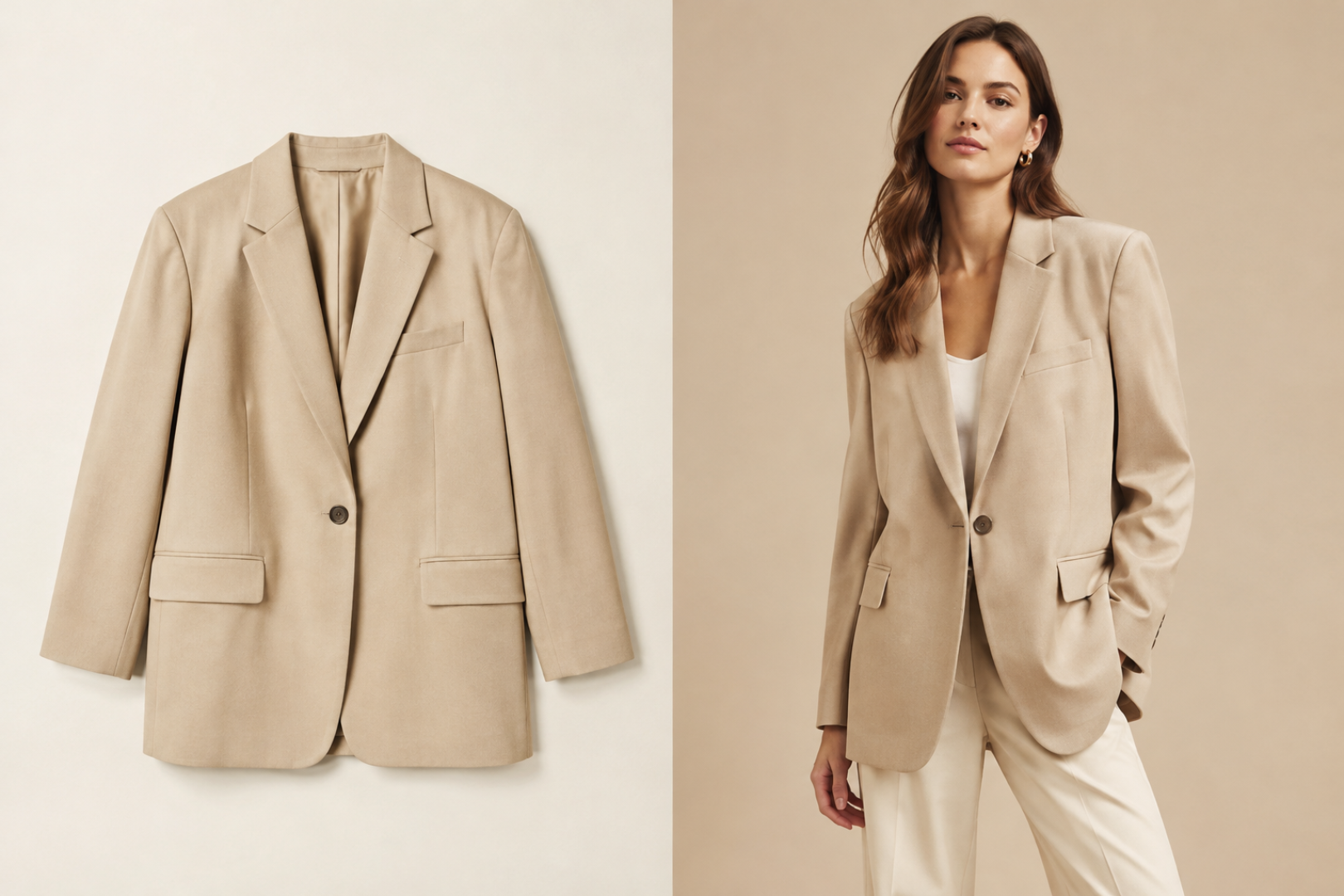
Why Do Fashion Product Photos Need Virtual Try-On AI Technology?
In the fashion industry, product visuals are a crucial element of the marketing process. Before making a purchase, prospective customers typically evaluate the color, style, cut, material, and overall look of a garment. Photos that only show products hanging up or laid flat on a surface are sometimes insufficient to give a clear picture of how the clothing looks when worn.
1. Consumers Want to See Products Being Worn
Product photos featuring human models provide clearer visual context than standard product shots. Consumers can observe how a garment looks when worn, including its silhouette, length, cut, and overall styling. For example, consider a clothing brand selling an oversized shirt. A flat-lay photo can display the shirt's color and design, but it may not adequately convey its oversized fit when worn. Model visuals help communicate this information much more effectively.
2. Photoshoot Production Requires Extensive Preparation
Conventional fashion photoshoots involve numerous requirements, ranging from models, photographers, studios, lighting, and wardrobe styling to the editing process. When a brand has multiple collections or color variations, visual production can become increasingly complex. For growing businesses, organizing a photoshoot for every single product is not always a practical option. Virtual Try-On AI serves as an efficient alternative for creating visual variations from existing product assets.
3. Brands Need Visual Consistency
Visual consistency helps a brand build an easily recognizable identity. Using varying models, backgrounds, lighting, and photography styles can make a catalog look disorganized. With the right AI workflow, brands can develop a consistent visual concept across various product collections, from catalog photos to social media promotional materials.

Tips for Generating More Professional Virtual Fashion Photos
Maintain Product Accuracy – Do not let the AI alter the actual design of your product. Check the colors, patterns, garment length, collar shape, button placement, and material texture. If the result differs from the original product, do not use the image as a catalog representation without making corrections.
Use Visual Concepts Tailored to Your Target Market – A streetwear brand does not need to use the same visual approach as a luxury brand. Choose models, poses, lighting, and backgrounds based on your brand positioning and target audience profile.
Build Catalog Consistency – Establish visual standards such as aspect ratios, background colors, lighting styles, and composition. Create reusable prompt guidelines for upcoming collections.
Use AI as a Support Tool, Not a Replacement for Review – Conduct a manual inspection before publishing any images. Pay close attention to the model's anatomy, fabric texture, garment details, and potential AI artifacts. Additionally, ensure that the use of model visuals complies with platform policies and applicable marketing regulations.
Frequently Asked Questions
Q1. What is Virtual Try-On AI?
Virtual Try-On AI is an artificial intelligence technology that helps visualize how a fashion product looks when worn by a virtual model. This technology can be used to generate catalog photos from source product images such as flat-lays or mannequins.
Q2. Can Virtual Try-On AI be used without a photoshoot?
Yes. You can use existing product photos as visual sources to generate virtual model looks. However, the results still require careful review to ensure the shape, color, and details of the product match the original item.
Q3. Is Virtual Try-On AI suitable for fashion SMEs (Small and Medium Enterprises)?
Yes. This technology can be a great alternative for SMEs looking to expand their catalog photo variations without having to conduct a photoshoot for every product. Users still need to tailor the output to fit their brand needs and budget.
Q4. What is the difference between Virtual Try-On and an AI Fashion Model Generator?
Virtual Try-On focuses specifically on visualizing a fashion product being worn by a virtual model. Meanwhile, AI Fashion Model Generator is a broader term for technology that generates fashion model visuals using AI, encompassing the model, pose, and overall photography concept.