AI-Generated Model Photos for Cosmetics & Beauty Brands: A Practical Guide
AI-generated model photography lets beauty brands produce packshots, application shots, and texture close-ups across a wide range of skin tones and moods from a single product photo — without booking separate models or shoots for every variation a beauty catalog needs.
Stocktree Team
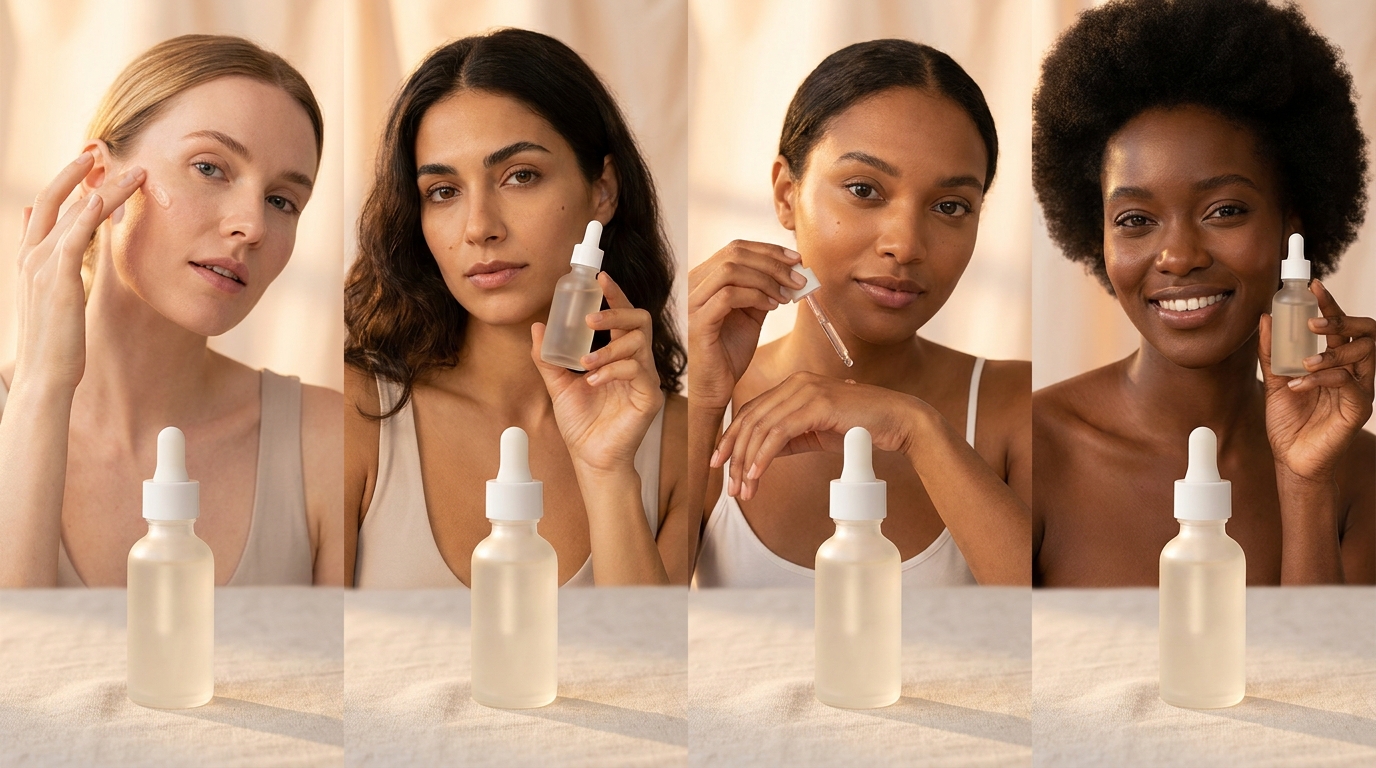
Why Beauty Brands Need More Visual Variety Than Almost Any Other Category
Beauty and cosmetics products are judged on things a plain packshot can't show: how a foundation shade actually looks on different skin tones, how a texture spreads, what a lip color looks like applied rather than in the tube. A single product photo rarely does the job — most beauty listings need packshots, on-skin application shots, close-up texture or swatch images, and lifestyle or mood shots, ideally across a representative range of skin tones.
Producing that range with traditional photography means booking multiple models to cover different skin tones for every product, then repeating the shoot for every shade variant. For a brand with a multi-shade foundation line, that multiplies fast — and most small and mid-sized beauty sellers simply skip most of it, publishing a single generic shot instead.
AI Use Cases for Beauty Brands
- Packshots — clean studio product photography for the primary listing image, consistent across an entire line.
- Skin-tone-diverse model shots — the same product shown across a visible range of skin tones without separate model bookings.
- Texture and swatch close-ups — macro-style shots showing how a cream, powder, or liquid actually looks and behaves.
- Mood and lifestyle backgrounds — softer, styled scenes that match a brand's visual identity for social and campaign content.

Building Trust with Authentic-Feeling AI Visuals
Beauty shoppers are visually literate and quick to notice when a product image looks artificial — overly smoothed skin, unnatural lighting, or a texture that doesn't behave the way the real product does. A few practices help AI beauty imagery read as authentic rather than synthetic:
- Keep skin texture natural — avoid over-smoothing settings that erase pores and fine detail; real skin texture builds more trust than an airbrushed look.
- Match lighting to the product's actual finish — a matte product photographed with glossy, high-shine lighting can misrepresent the texture.
- Review color accuracy carefully — shade and undertone accuracy matters more in beauty than almost any other category — a generated image that shifts a shade even slightly can create returns and complaints.
Beauty marketing also sits under closer regulatory and platform scrutiny than most categories, particularly around claims and before/after imagery. AI-generated visuals should represent the product honestly — accurate color, accurate texture, no implied results the product doesn't actually deliver. Brands making specific efficacy or before/after claims should check the advertising rules that apply in their market.
From One Product Photo to a Full Campaign Set
- Upload one clean packshot of the product — bottle, tube, compact, or jar — with accurate color under neutral lighting.
- Generate the compliance shot first: a pure white-background packshot for the primary marketplace listing image.
- Generate skin-tone variations for application or swatch shots, covering the range relevant to the product's actual shade offering.
- Generate mood/lifestyle versions for social posts and paid ad creative, matched to campaign or seasonal themes.
- Export all sizes needed across marketplace, Instagram, and ad placements from the same generation batch.
Frequently Asked Questions
Q1. Can AI accurately show how a shade looks on different skin tones?
Yes, modern AI models can render a product across a range of skin tones from one reference photo. It's worth reviewing generated shade accuracy against the real product before publishing, especially for foundation and complexion products.
Q2. Will AI-generated texture close-ups look realistic?
Texture and swatch shots are one of the stronger use cases for AI beauty photography, since the model can be directed to show specific behaviors like shimmer, matte finish, or cream consistency clearly.
Q3. Is it okay to use AI-generated 'before and after' style images?
Any before/after or results-based claim should reflect what the product actually does and typically needs to comply with advertising standards in your market, regardless of whether the image was AI-generated or photographed traditionally.
Q4. How many skin tones should a beauty brand show per product?
As many as reasonably represent your actual customer base and shade range — the goal is that a shopper can find a model that resembles them, not a fixed number.
Q5. Does this work for makeup, skincare, and haircare equally well?
Yes, though the most valuable output differs slightly: application shots matter most for makeup, texture close-ups for skincare, and result-style lifestyle shots for haircare.